Website Development
Fast, secure, scalable websites — custom-coded or CMS-based — engineered for performance and search.
Explore the service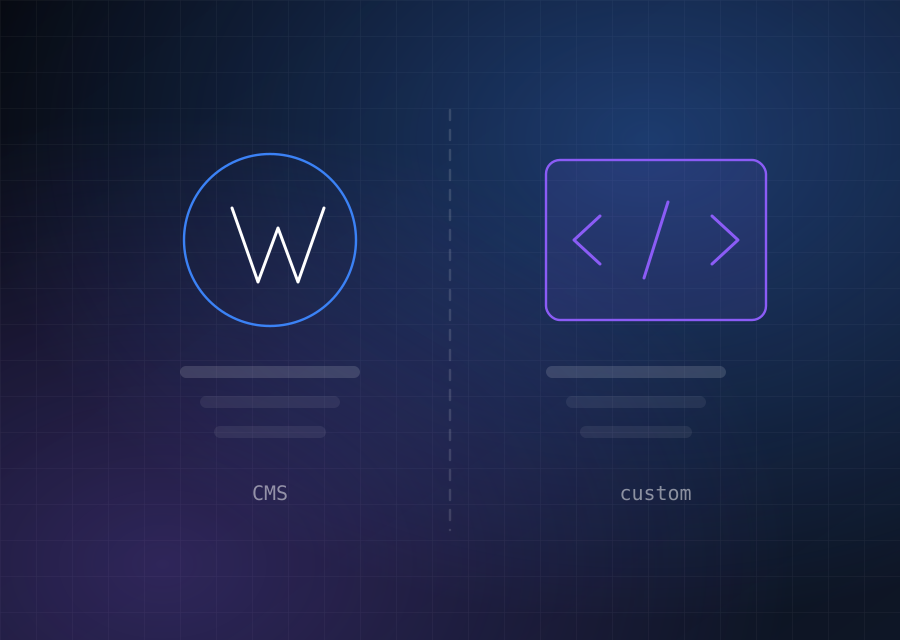
We build both WordPress sites and fully custom applications, so we have no platform to sell you. Here's the framework we actually use when advising clients — because the right answer depends on what you're building, who will maintain it, and where the complexity in your project really lives.
WordPress is a content management system first. If your site is fundamentally pages and posts — services, portfolio, blog, contact — WordPress gives you a mature editing experience, a huge talent pool, and proven e-commerce through WooCommerce. Content-driven business sites are its home turf.
The typical failure mode isn't WordPress itself — it's a purchased theme plus dozens of plugins. That stack is slow, fragile under updates, and generic-looking. A custom-developed WordPress theme avoids nearly all of this, which is the only way we build on it.
The moment your project's core is workflow rather than content — inventory tracking, dispatch and scheduling, customer portals, complex calculators, anything with roles and business rules — forcing it into WordPress means fighting the platform forever. Custom applications cost more upfront and repay it in fit, performance and room to grow.
Plenty of good builds are both: a WordPress marketing site your team edits, connected to a custom application that does the heavy lifting. You don't have to pick one philosophy — you have to put each part of the project on the platform that suits it.
Answer those honestly and the platform usually chooses itself. If you'd like a second opinion on a specific project, we'll give you a straight recommendation — including when the cheaper option is the right one.
Fast, secure, scalable websites — custom-coded or CMS-based — engineered for performance and search.
Explore the serviceFree consultation — bring your website or your questions and get straight answers.
Book a call